Rep. Gillen Questions Director of Space Commerce on the Office's Mission Authorization Proposal
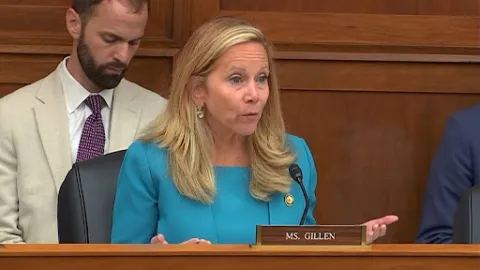
A video of the full remarks is available HERE.
WASHINGTON, DC — Congresswoman Laura Gillen (NY-04) questioned the Director of the Office of Space Commerce (OSC), Taylor Jordan, in a House Science, Space, and Technology Committee hearing on how the federal government can better support U.S. companies seeking to deploy technology in space and protect them against hostile foreign governments. Rep. Gillen questioned Director Jordan on how the Office’s new Space Commerce Certification to streamline the deployment of new space technologies would benefit American companies, including those on Long Island.
Rep. Gillen also examined what national security guardrails are in place to ensure that these companies are fully vetted so foreign companies and governments are not permitted to take advantage of the U.S. space commerce industry. Director Jordan responded that there will be an interagency effort to vet applications with input from the Department of War, NASA, and the Department of State. These agencies will be consulted for their expertise to certify that the companies that apply meet the necessary certifications.
On questioning what the incentive is for companies to participate in the Space Commerce Certification process:
Rep. Gillen: “I share [Chairman Babin's] concerns about this just being another regulatory burden for companies to have to overcome, and you mentioned that the process is voluntary. What is the real incentive for companies to get this certification?”
Director Jordan: “Thank you for the question, and that's a great one. That is at the core of why we did this. So there are gaps in regulations right now. Why we did this is because an industry, a company who has a novel mission, can put a license into the federal government, either through us, FAA, FCC, and it's no guarantee that they'll get an answer.
So what we're trying to do is to actually first get an answer, and that's step one for us. Step one is closing the regulatory gaps. Now, the second part of that is the voluntary nature. We want to provide incentive for companies to use this new system, and the incentive that we've come up with is if we can provide a streamlining of the different regulations where a company would put in one application to us, it could help satisfy portions of the FAA and the FCC's obligations for their own work.”
On questioning what national security guardrails have been established:
Rep. Gillen: “And as you're vetting the companies that are putting in for the certification, what kind of guardrails have you put in there to protect national security?”
Director Jordan: “Through the interagency, we will have the Department of War and NASA, FAA, FCC, State Department, all with the core U.S. government equities. And that's in addition to national security. There are international obligations, space safety.
We need their expertise to be able to have those conversations and ask the right questions with us. When there is a dispute over something through the interagency, we feel like we have built in a dispute resolution elevation process that we've modeled after our CRSRA license as well. So we feel like we will have the ability to seek resolution, but national security is extremely important, and the Department of War will absolutely be in the interagency process.”
###